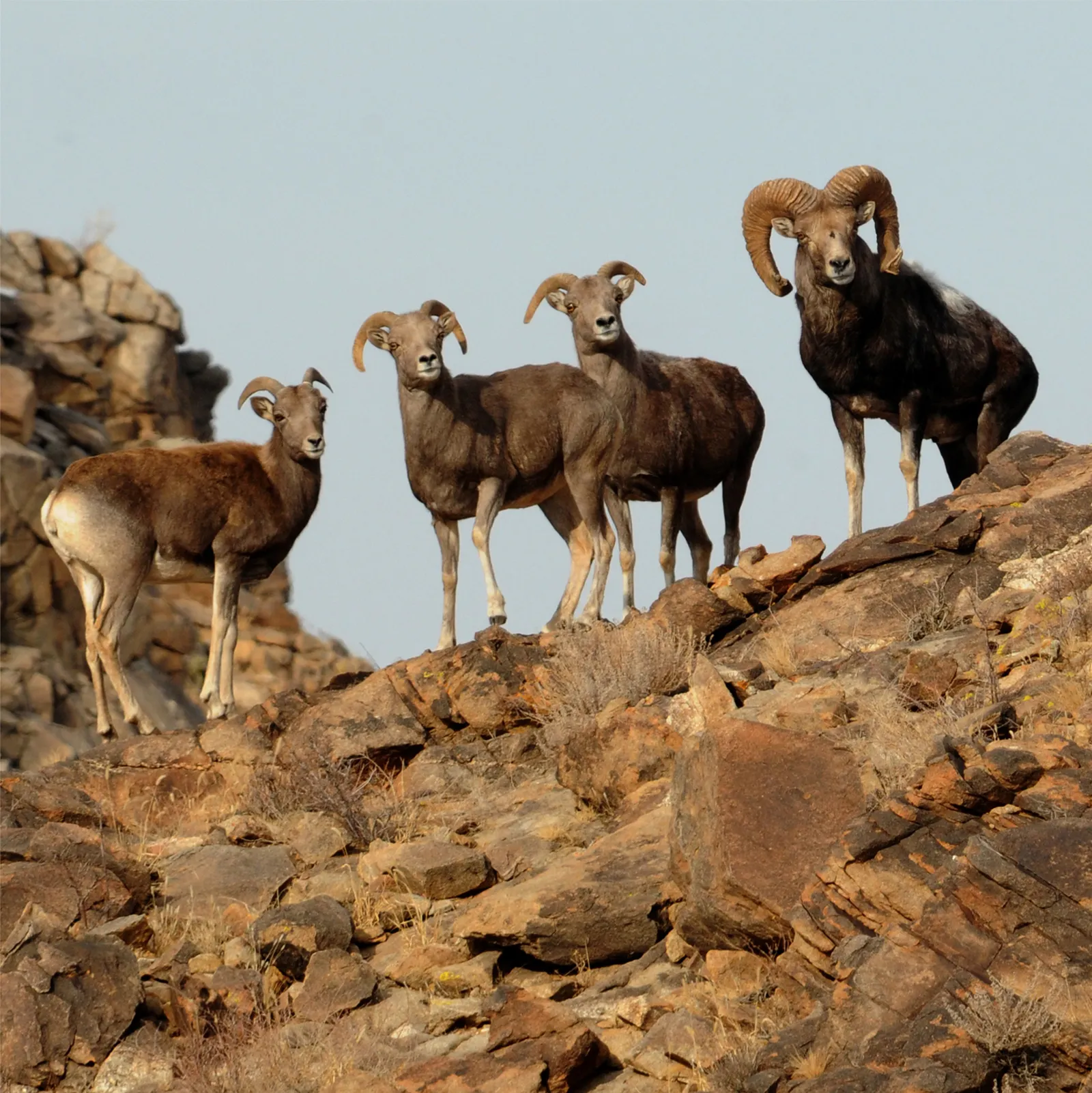
Name: Argali / Argali Sheep
Scientific name: Ovis ammon
Mongolian name: Аргаль хонь / Аргаль
Other English names: Mountain Sheep, Wild Sheep
The Argali, also called the Argali Sheep, is the largest wild sheep in the world. It is a strong mountain ungulate that lives in open mountains, rocky slopes, dry hills, high valleys, and steppe areas.
In Mongolia, Argali sheep are found in mountainous and rocky regions, including the Altai Mountains, Gobi-Altai, Hangai, and other dry mountain-steppe areas. They prefer open landscapes where they can see danger from a distance and escape onto steep rocky slopes.
The Argali has a large body, long legs, a short tail, and strong hooves. Its coat is usually greyish-brown, sandy brown, or light brown, helping it blend into dry rocks, mountain slopes, and steppe grasslands. The belly and rump area are usually lighter or whitish.
Male Argali, called rams, are famous for their very large spiral horns. These horns curve outwards and backwards and can become very heavy. Rams use their horns during the breeding season when they compete with other males. Females, called ewes, are usually smaller and have shorter, thinner horns.
The Argali is a herbivore. It mainly feeds on grasses, herbs, shrubs, and other mountain plants. During different seasons, it may move between higher and lower areas to find food, water, and safer habitat.
Argali sheep usually live in small groups or herds. Females and young often stay together, while adult males may live separately outside the breeding season. During the mating season, males join female groups and compete for mates.
The Argali is very alert and cautious. It uses its sharp eyesight, strong legs, and knowledge of rocky terrain to avoid predators. When threatened, it can run quickly and climb steep slopes. Natural predators include wolves, snow leopards, and large birds of prey that may take young lambs.
Argali sheep play an important role in mountain and steppe ecosystems. By grazing naturally, they help maintain the balance of grassland and mountain habitats. They are also an important prey species for large predators such as snow leopards and wolves.
The Argali is well adapted to harsh mountain environments. Its strong hooves help it move across rocks and steep slopes, while its thick winter coat protects it from cold weather. Its colour also provides camouflage in dry and rocky landscapes.
Today, Argali sheep face several threats. These include illegal hunting, habitat loss, competition with livestock for pasture and water, disturbance from human activities, mining, roads, fencing, and habitat fragmentation. These threats can reduce their movement, feeding areas, and safe breeding places.
Protecting the Argali is important because it is one of Mongolia’s most iconic wild mountain animals. Conservation of the Argali also helps protect the wider mountain-steppe ecosystem where many other rare animals live.
Image gallery